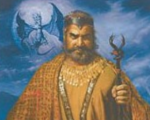




Warlords Strategy Article
We invited two of our most successful and prolific Warlords players to shed some light on some basic strategy questions for Warlords, emphasizing how the decisions are different than in Steel. Warlords doesn’t get much discussion on the forum and we are hoping this article provides some insight and spurs the spirit of some players who have been considering the format. Four questions to The Deliverer and Jumpingfist. Let’s see what they have to share.
1. Draft. Take us through draft strategy, perhaps explaining both your own and your opponents selections as you know them in an actual Warlords draft. What are you looking for mainly? How do you adapt as the draft goes on? Do you consider your opponents’ tendencies – if so, how so? What kingdoms do you mostly choose for your first round, and how do you round out your team? Which do you not choose in the Warlords format?
Deliverer: To start, you need a kingdom to build your kingdoms around. Based on the recent changes to 170/171, this lends me to wanting to choose a military kingdom. You'll want to balance between power (RD/GI) with a more consolidated starting position (TR/BL). Once I find out who my first pick is, I start to look at kingdoms that would be a good match, geographically. One of the most important things in drafting, in my opinion, is to have a geographically consolidated position. In other words, you want a corner of the map, or an edge. If you get TR, you'll probably be looking at EL/WI/GN as your second pick. I tend to pick my kingdoms based on who I feel I do well with, rather than trying to guess who my opponents are likely to pick. That said, I definitely track which kingdoms I tried to get that were not available, as that will potentially have a big impact on my further picks. Round 3, I try to pick a kingdom that fits geographically, but also something that adds something to the mix. Keep in mind the kingdoms that get ward at level 1 for their wizards. That's pretty invaluable if you're trying to block neighbors from picking up cities. For that, you're in good shape if you got GI for your first pick. If not, you'll want to consider EL, RA, AN.
Jumpingfist: You cannot win with just a good draft but you can set yourself up for a loss with a bad draft. For me the single most important thing to get from the draft is a team that is not going to be set up to face two other teams at the same time. This happens the most often if someone is force to take a 3rd kingdom with a region between them and their other two kingdoms. The draft is a blind snake draft. If you pick 1st you will also pick 8th and 9th.
First Round. The common thought is RD and GI are best two kingdoms for this format given their ability to overpower any other kingdom and take capitals early in the contest. I normally put RD 1st and GI 2nd in my draft preference. I feel RD is a bit more isolated and easier to shift gears with if needed. The GI likely the strongest single kingdom pays the price by being dead center on the map. Not always bad a lot of people are not going to go looking to make the GI his enemy, but you do have to be extra careful not force others to feel the need to attack your other kingdoms. I tend to put the TR as my last choice in the 1st round knowing the AN will likely not go in the first round it leaves me able to grab the AN in round 2 and have a good synergy, allowing one to take the region and the other to advance quickly towards the next target. My 3rd kingdom choice of the first round varies what mood I am in or maybe how I think other players may draft. DA or BL would normally be on my list as third. BL due to the speed and starting with a southern region. DA because with the addition of many agent is able to generally get the region quickly and become a good support kingdom to others selected.
Before going to the second round, it is good to know which kingdoms are normally available each round:
· 1st round RD and GI will always be gone.
· 1st round good chance two of these are gone as well TR WI BL DA
2nd Round. This will be the core of your team. so pick a position that can support your 1st or put you in position to grab a few 3rd round available picks. Good picks depend on your 1st round, so these would be some good pairings: RD DA, RD WI, RD GN, GI DE, GI BL, DA RA, BL DE, BL RA, TR AN, AN EL, WI EL. 2nd round WI TR Likely not around for 3rd round.
3rd Round. You want to select a kingdom that will make it so you have a maximum of 1 starting enemy. an example of this if have BL RA try for DE DA and settle for SO if they are not available. if you reach for DW or GN you will have a good chance of having two teams on you. if that happens you will almost always loose. 3rd round RA stands out as sleeper pick here to me. With the SO normally not in most Warlords games the RA has a region to themselves and the reaction levels to help support most any other kingdoms.
Likely not drafted are the WA, SO and UN. If one of these are drafted then DW EL likely to follow as un-drafted.
2. Early Strategy. How is it different from a single player game? More aggressive, less aggressive, depends (on what)? How much trading do you do among kingdoms? Do you declare your kingdoms allies or does that reveal too much? Are there some different orders you choose here that you would not in a Steel game?
Deliverer: It's definitely much more aggressive than a regular game. There's no negotiations; you just pick a target and go for it. Capitals become early targets, and it's not uncommon at all to bring resources from all three of your kingdoms to bear on a single target. Trading happens as it needs to. By around turn 5, when slow season hits the north, declarations tend to happen to make sure troops don't starve. Up until then, I try to keep my kingdoms from being associated with each other (though it's tough to really do that). As to orders... I see more 495s in titans, and much less agent training. The game is much faster paced, so anything that requires building up (agents, wizards, etc.) often goes by the wayside.
Jumping Fist: Warlords starts out at a faster pace because you will have perfect coordination between kingdoms. There are a lot of 3 vs 1 situations especially with the TR and RD who also want a 3rd region for their team. 10 regions means 2 teams get three regions and 2 teams get two regions, but all teams want 3.
I like to select kingdoms that can trade towns between each other. I do not always trade the but use it as a backup if I did not find enough PCs for that kingdom. RA BL DE come to mind for this. BL having two towns to fall back on can actually help RA and DA scout some of there regions early on to give the best chance for all three to get the region. I like to give the resource starved kingdoms a little boost. If I have a mage kingdom I will dump extra gold into the kingdom so they can quickly get Dome level wizards. This can turn away an early attack very effectively.
Enemy ally is a good tool to use in a blind game. I almost never declare early on an ally, unless i am declaring a bogus ally just to confuse others but not likely I will waste an order for that. I do like to declare enemies of others I am not even fighting to maybe make other teams think I am doing something other than just building up.
I know I had a good draft and good potential game when i see the other teams fighting while I am sitting back building up my mages and resources. I may just sit and build for the first 10 turns or so, unless I see a clear opportunity.
3. Intel. About when do you normally know who is playing which kingdoms in an anonymous draft? Do you do more or less recon per kingdom in this environment? Do you use the High Priestess more or less? Do you develop agents more or less, and why?
Deliverer: You may not know who is playing which kingdoms, but by about turn 5 or 6 you normally have a really good idea of which kingdoms are on a team. Recons are invaluable, and under-used, in my opinion. Because of this, coupled with the faster pace of the game, agents are not built up as much. You may have a single agent on standing order to train, but with most once they are up to level 4 the training stops and they are used for recons (to pierce mask), counter espionage, etc. Priestesses, once bought, should be used every turn that orders permit until you have a good idea of the areas around you and the kingdoms you want to attack.
Jumping Fist: Generally speaking you will know the teams by turn 5 sometimes sooner if the game master reveals which kingdoms are not playing. Normally T5 or T6 you start getting confirmation of who you thought was on which team by the food for gold trades. Only allies know when to make a food for gold trade. Enemy / ally declarations can be tricks especially if DuPont is in the game. within the first few turns send scouts to any city you can. In the early going cities get fought over.
Here’s a trick to try: scout Meridon and see if the AN is driving the city neutral and TR taking control on T2 you know they are working together.
I likely use the same number of agent orders in warlords vs single player but am looking for intel more than PCs. having kingdoms close to each other you can share group movements and help out the ally easily. Priestess I find i use less in warlords format except that kingdom normally own the entire region so it is easier to just divine the PCs right after they get control. Artifact hunting is a luxury for me. I only do it if I am not in the middle of a war. Single player I normally look for king artifacts first but in warlords especially if I have no mage kingdom I will look for wizard to be able to get to the Dome level wizards for kingdoms like RA EL DA GN. For agent development, the kingdom with the highest max level would normally do the bulk of the high level agent training
4. Mid-game Strategy. Do you go for the throat of what you think is a single player’s three kingdoms, do you try to consolidate geography of your own kingdoms, do you hunt artifacts? What is your signal to go into 5th gear?
Deliverer: Once I have my starting position set, I immediately jump on a target. Ideally, I limit the attack to a single-player's kingdoms, so as not to invite someone else to jump on my back. If possible, 2 or more kingdoms of mine will attack a single kingdom on the opposition to make sure the attack is successful (and quick). Artifact hunting, for me, is only when I land on a sighting with a group. I won't spend time or priestesses trying to get short names, and agents are used to trail groups, recon pop centers, etc... not much room for 978s. As to what the signal to turn it up a notch is... you need to be in 5th gear on turn 1, or the guys that are will run right over you. There simply isn't time allowed to build in a warlords game.
Jumpingfist: I try to keep my fight with one enemy’s kingdoms as much as I can. Sometimes even looking the other way if they take one of my PCs in their own regions. I also try to stay at 4 regions of less until I am ready to make the final strike. At the point I make my strike I may hit someone who I have not attacked at all but built up my reaction levels and fully scouted before going in. 5th gear comes when I know I can take 2 regions at the same time. If I am fighting one enemy the whole game I will need to beat them down before I can look at plans for other regions. I still try to stay at a max of 4 regions as to not get the other two teams to stop fighting and go after me. Fighting 3 vs 3 is different than singles game as well. 3 kingdoms can hit a single region very hard or spread out and try to hit multiple capitals at the same time and the battle field could be over as many as 6 regions.
Warlords is a very good format for an Alamaze game, the draft is almost a little game within itself. The Magic (Team game) plays in very similar ways as listed above except you have two other real people playing as your teammates.
Thanks to our two contributors for their insights on Warlords Strategy. Hope you find it useful and your feedback is welcome.
We invited two of our most successful and prolific Warlords players to shed some light on some basic strategy questions for Warlords, emphasizing how the decisions are different than in Steel. Warlords doesn’t get much discussion on the forum and we are hoping this article provides some insight and spurs the spirit of some players who have been considering the format. Four questions to The Deliverer and Jumpingfist. Let’s see what they have to share.
1. Draft. Take us through draft strategy, perhaps explaining both your own and your opponents selections as you know them in an actual Warlords draft. What are you looking for mainly? How do you adapt as the draft goes on? Do you consider your opponents’ tendencies – if so, how so? What kingdoms do you mostly choose for your first round, and how do you round out your team? Which do you not choose in the Warlords format?
Deliverer: To start, you need a kingdom to build your kingdoms around. Based on the recent changes to 170/171, this lends me to wanting to choose a military kingdom. You'll want to balance between power (RD/GI) with a more consolidated starting position (TR/BL). Once I find out who my first pick is, I start to look at kingdoms that would be a good match, geographically. One of the most important things in drafting, in my opinion, is to have a geographically consolidated position. In other words, you want a corner of the map, or an edge. If you get TR, you'll probably be looking at EL/WI/GN as your second pick. I tend to pick my kingdoms based on who I feel I do well with, rather than trying to guess who my opponents are likely to pick. That said, I definitely track which kingdoms I tried to get that were not available, as that will potentially have a big impact on my further picks. Round 3, I try to pick a kingdom that fits geographically, but also something that adds something to the mix. Keep in mind the kingdoms that get ward at level 1 for their wizards. That's pretty invaluable if you're trying to block neighbors from picking up cities. For that, you're in good shape if you got GI for your first pick. If not, you'll want to consider EL, RA, AN.
Jumpingfist: You cannot win with just a good draft but you can set yourself up for a loss with a bad draft. For me the single most important thing to get from the draft is a team that is not going to be set up to face two other teams at the same time. This happens the most often if someone is force to take a 3rd kingdom with a region between them and their other two kingdoms. The draft is a blind snake draft. If you pick 1st you will also pick 8th and 9th.
First Round. The common thought is RD and GI are best two kingdoms for this format given their ability to overpower any other kingdom and take capitals early in the contest. I normally put RD 1st and GI 2nd in my draft preference. I feel RD is a bit more isolated and easier to shift gears with if needed. The GI likely the strongest single kingdom pays the price by being dead center on the map. Not always bad a lot of people are not going to go looking to make the GI his enemy, but you do have to be extra careful not force others to feel the need to attack your other kingdoms. I tend to put the TR as my last choice in the 1st round knowing the AN will likely not go in the first round it leaves me able to grab the AN in round 2 and have a good synergy, allowing one to take the region and the other to advance quickly towards the next target. My 3rd kingdom choice of the first round varies what mood I am in or maybe how I think other players may draft. DA or BL would normally be on my list as third. BL due to the speed and starting with a southern region. DA because with the addition of many agent is able to generally get the region quickly and become a good support kingdom to others selected.
Before going to the second round, it is good to know which kingdoms are normally available each round:
· 1st round RD and GI will always be gone.
· 1st round good chance two of these are gone as well TR WI BL DA
2nd Round. This will be the core of your team. so pick a position that can support your 1st or put you in position to grab a few 3rd round available picks. Good picks depend on your 1st round, so these would be some good pairings: RD DA, RD WI, RD GN, GI DE, GI BL, DA RA, BL DE, BL RA, TR AN, AN EL, WI EL. 2nd round WI TR Likely not around for 3rd round.
3rd Round. You want to select a kingdom that will make it so you have a maximum of 1 starting enemy. an example of this if have BL RA try for DE DA and settle for SO if they are not available. if you reach for DW or GN you will have a good chance of having two teams on you. if that happens you will almost always loose. 3rd round RA stands out as sleeper pick here to me. With the SO normally not in most Warlords games the RA has a region to themselves and the reaction levels to help support most any other kingdoms.
Likely not drafted are the WA, SO and UN. If one of these are drafted then DW EL likely to follow as un-drafted.
2. Early Strategy. How is it different from a single player game? More aggressive, less aggressive, depends (on what)? How much trading do you do among kingdoms? Do you declare your kingdoms allies or does that reveal too much? Are there some different orders you choose here that you would not in a Steel game?
Deliverer: It's definitely much more aggressive than a regular game. There's no negotiations; you just pick a target and go for it. Capitals become early targets, and it's not uncommon at all to bring resources from all three of your kingdoms to bear on a single target. Trading happens as it needs to. By around turn 5, when slow season hits the north, declarations tend to happen to make sure troops don't starve. Up until then, I try to keep my kingdoms from being associated with each other (though it's tough to really do that). As to orders... I see more 495s in titans, and much less agent training. The game is much faster paced, so anything that requires building up (agents, wizards, etc.) often goes by the wayside.
Jumping Fist: Warlords starts out at a faster pace because you will have perfect coordination between kingdoms. There are a lot of 3 vs 1 situations especially with the TR and RD who also want a 3rd region for their team. 10 regions means 2 teams get three regions and 2 teams get two regions, but all teams want 3.
I like to select kingdoms that can trade towns between each other. I do not always trade the but use it as a backup if I did not find enough PCs for that kingdom. RA BL DE come to mind for this. BL having two towns to fall back on can actually help RA and DA scout some of there regions early on to give the best chance for all three to get the region. I like to give the resource starved kingdoms a little boost. If I have a mage kingdom I will dump extra gold into the kingdom so they can quickly get Dome level wizards. This can turn away an early attack very effectively.
Enemy ally is a good tool to use in a blind game. I almost never declare early on an ally, unless i am declaring a bogus ally just to confuse others but not likely I will waste an order for that. I do like to declare enemies of others I am not even fighting to maybe make other teams think I am doing something other than just building up.
I know I had a good draft and good potential game when i see the other teams fighting while I am sitting back building up my mages and resources. I may just sit and build for the first 10 turns or so, unless I see a clear opportunity.
3. Intel. About when do you normally know who is playing which kingdoms in an anonymous draft? Do you do more or less recon per kingdom in this environment? Do you use the High Priestess more or less? Do you develop agents more or less, and why?
Deliverer: You may not know who is playing which kingdoms, but by about turn 5 or 6 you normally have a really good idea of which kingdoms are on a team. Recons are invaluable, and under-used, in my opinion. Because of this, coupled with the faster pace of the game, agents are not built up as much. You may have a single agent on standing order to train, but with most once they are up to level 4 the training stops and they are used for recons (to pierce mask), counter espionage, etc. Priestesses, once bought, should be used every turn that orders permit until you have a good idea of the areas around you and the kingdoms you want to attack.
Jumping Fist: Generally speaking you will know the teams by turn 5 sometimes sooner if the game master reveals which kingdoms are not playing. Normally T5 or T6 you start getting confirmation of who you thought was on which team by the food for gold trades. Only allies know when to make a food for gold trade. Enemy / ally declarations can be tricks especially if DuPont is in the game. within the first few turns send scouts to any city you can. In the early going cities get fought over.
Here’s a trick to try: scout Meridon and see if the AN is driving the city neutral and TR taking control on T2 you know they are working together.
I likely use the same number of agent orders in warlords vs single player but am looking for intel more than PCs. having kingdoms close to each other you can share group movements and help out the ally easily. Priestess I find i use less in warlords format except that kingdom normally own the entire region so it is easier to just divine the PCs right after they get control. Artifact hunting is a luxury for me. I only do it if I am not in the middle of a war. Single player I normally look for king artifacts first but in warlords especially if I have no mage kingdom I will look for wizard to be able to get to the Dome level wizards for kingdoms like RA EL DA GN. For agent development, the kingdom with the highest max level would normally do the bulk of the high level agent training
4. Mid-game Strategy. Do you go for the throat of what you think is a single player’s three kingdoms, do you try to consolidate geography of your own kingdoms, do you hunt artifacts? What is your signal to go into 5th gear?
Deliverer: Once I have my starting position set, I immediately jump on a target. Ideally, I limit the attack to a single-player's kingdoms, so as not to invite someone else to jump on my back. If possible, 2 or more kingdoms of mine will attack a single kingdom on the opposition to make sure the attack is successful (and quick). Artifact hunting, for me, is only when I land on a sighting with a group. I won't spend time or priestesses trying to get short names, and agents are used to trail groups, recon pop centers, etc... not much room for 978s. As to what the signal to turn it up a notch is... you need to be in 5th gear on turn 1, or the guys that are will run right over you. There simply isn't time allowed to build in a warlords game.
Jumpingfist: I try to keep my fight with one enemy’s kingdoms as much as I can. Sometimes even looking the other way if they take one of my PCs in their own regions. I also try to stay at 4 regions of less until I am ready to make the final strike. At the point I make my strike I may hit someone who I have not attacked at all but built up my reaction levels and fully scouted before going in. 5th gear comes when I know I can take 2 regions at the same time. If I am fighting one enemy the whole game I will need to beat them down before I can look at plans for other regions. I still try to stay at a max of 4 regions as to not get the other two teams to stop fighting and go after me. Fighting 3 vs 3 is different than singles game as well. 3 kingdoms can hit a single region very hard or spread out and try to hit multiple capitals at the same time and the battle field could be over as many as 6 regions.
Warlords is a very good format for an Alamaze game, the draft is almost a little game within itself. The Magic (Team game) plays in very similar ways as listed above except you have two other real people playing as your teammates.
Thanks to our two contributors for their insights on Warlords Strategy. Hope you find it useful and your feedback is welcome.